WAR ON SPARROWS !

Australian Galleries, 28 Derby St. Collingwood May 30 – June 17
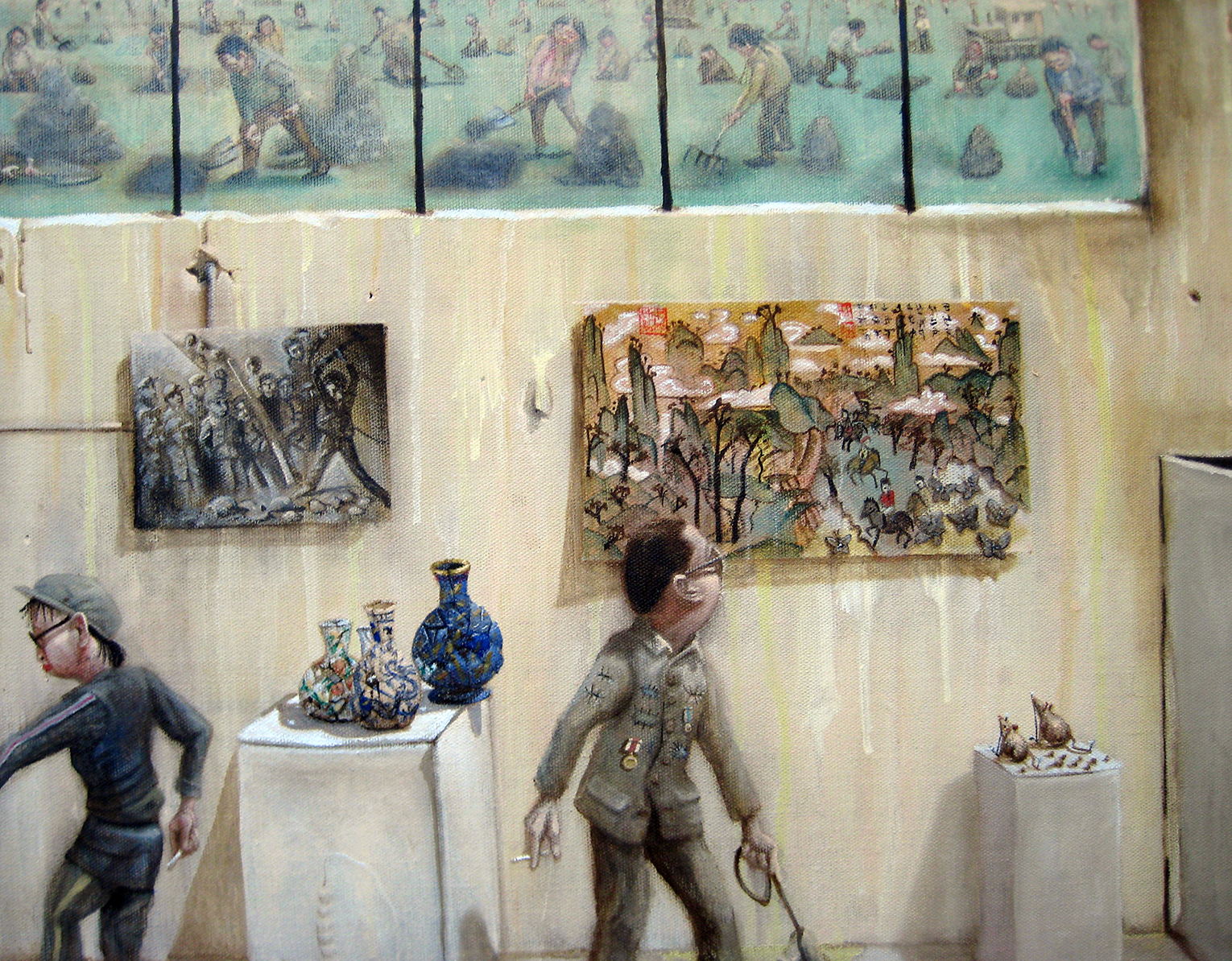
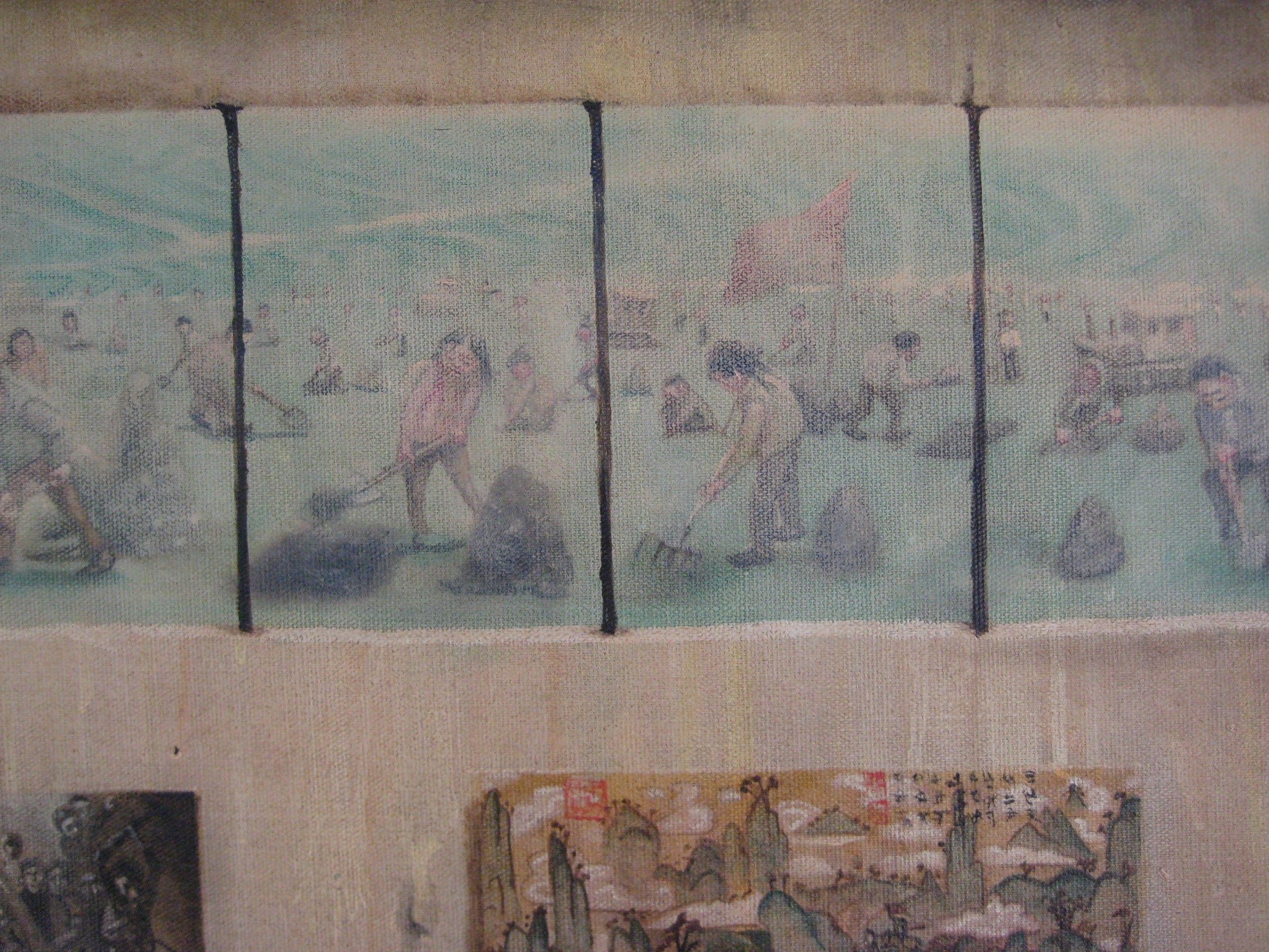
The Four Pests campaign was one of the first programs of the The Great Leap Forward under chairman Mao from 1958 to 1962. The four pests to be eliminated were rodents, flies, mosquitoes and sparrows. The extermination of sparrows is all so known as the Smash Sparrows Now Campaign! or the Eliminate Sparrows Now Campaign! The war on sparrows resulted in severe ecological imbalance and is regarded as being one of the causes of the following Great Chinese Famine. In 1960, the campaign against sparrows was ended and redirected to bed bugs.
Sparrows were accused of stealing approximately 2 kg (4 pounds) of grain per sparrow per year. Sparrow nests were smashed, eggs were smashed, and chicks were killed. Millions of people organized into groups, and hit noisy pots and pans to prevent sparrows from resting in their nests, their goal of causing them to drop dead from exhaustion worked. The ground was littered with dead and disabled birds. During the officially prescribed times of official noise making the sky was full of falling birds – making umbrellas essential for protection. The umbrellas where able to break the bird’s otherwise fatal
fall to the ground but meant that the surviving sparrows had to spend the rest of their lives with some
part of their body trapped in an umberella.


Some sparrows sort refuge in foreign embassies. The staff at the Polish embassy refused to let people come into the embassy to scare away and kill the sparrows who were hiding there and as a result the embassy was surrounded by people with drums, pots and pans. After two days of constant drumming, whistling and some shooting, the Poles had to use shovels to clear the embassy of dead birds. Prominent ornithologist Tso-sin Cheng pointed out that sparrows ate a large number of the insects that ate the crops, so in fact sparrows saved more grain than they “stole “. By April of 1960 The War On Sparrows was
ended by the party (not Mao ).


They turned the cemetery into a hospital then the hospital into a grain warehouse and then into an art museum.
Australian Galleries, 28 Derby St. Collingwood, May 30 – June 17

A narcissist requires a world available to interpretation, nothing is defined or acted upon by the past or the people from it. Descartes talked about empting every belief out of your head like empting a barrel of apples and then carefully examining every belief and only returning those beliefs to the barrel that pass your particular standards or in the Cultural Revolution’s case those apples that are “useful “.


add field deatail
Martina Navratilova vs. Chris Evert Lloyd
Artist’s talk, Saturday 2pm, June 3, Australian Galleries 28 Derby St. Collingwood

The biblical proverb “As iron sharpens iron, so one woman sharpens another”
In the late 70’s and 80’s when people watched Chris Evert and Martina Navratilova play tennis, they saw freedom vs. communism, hetro. vs. homosexuality, Christians vs. the atheists, beauty vs. aspiration, they saw a supermarket vs. a line to be let into a supermarket. But to compete with someone you must agree to run on the same track, to play on the same field or court. To compete with someone you must do what she is doing, to follow the same set of rules and share the same goals. The only way you’ll differentiate yourself is by doing precisely the same thing only slightly better. Thus, though performance may improve, the chances are that you will become increasingly like the person with whom you compete.
Martina Navratilova’s dad left her family when Martina was 3 and he committed suicide when Martina was 8. Martina’s early coach was then her new stepfather. Martina grew up in communist Prague
where even if you had a living and present father he was horribly emasculated by the government system which demanded obsequious obedience. The government made the decisions for the family not the father. Many office buildings in Prague had tennis nets painted on the outside of them with distant fathers working inside them and neglected daughters hitting against the walls, the balls never penetrating and always coming back.
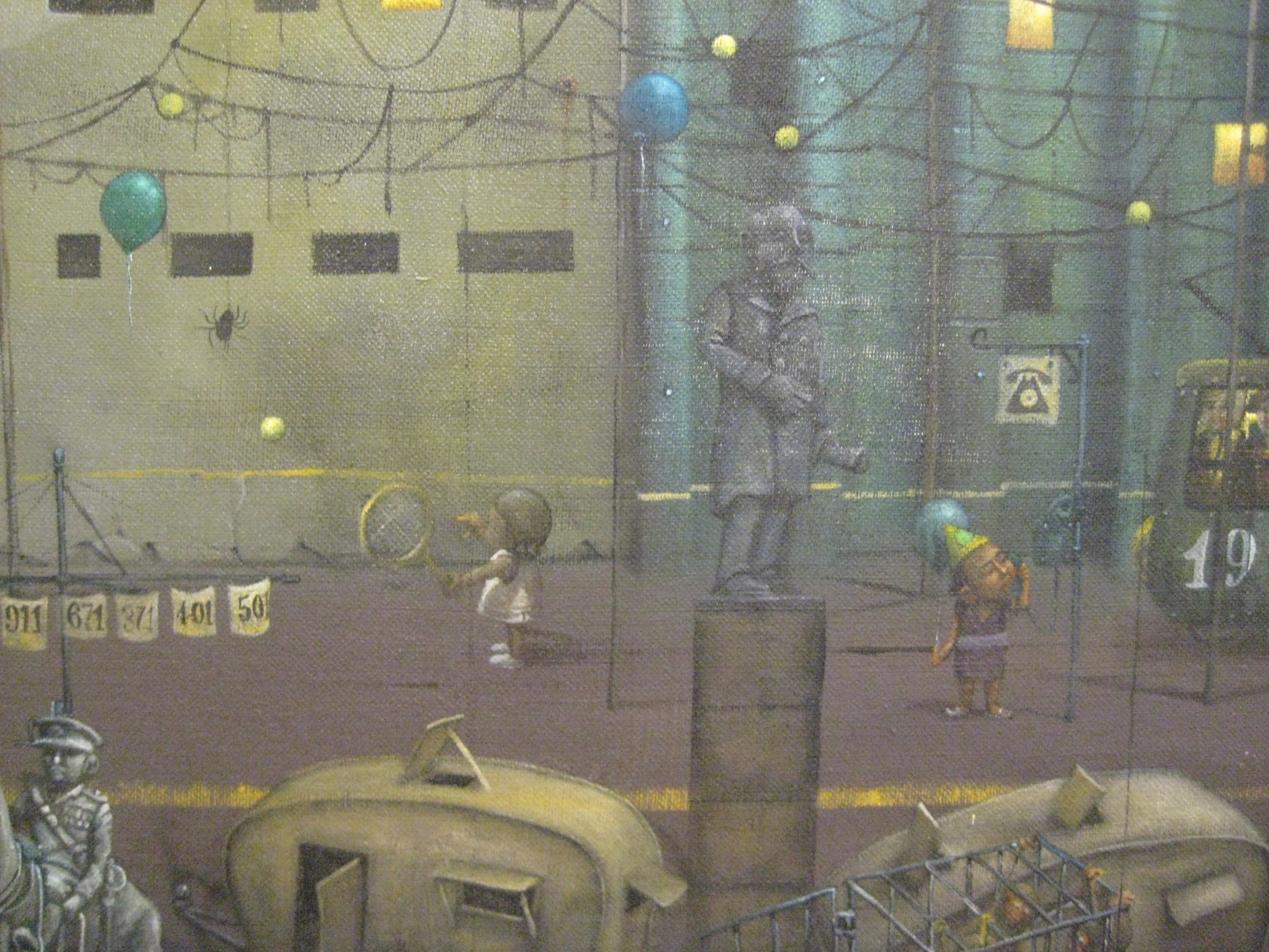
In her mid-teens – chaperoned by middle-aged male communist officials – Martina took her complicated psychology to the women’s tennis tour of the early 1970’s where women players were forced to play in wedding dresses and where the women players were given mops, cleaning detergent and ovens for winning tournaments.
Chris Evert grew up amongst a big middle class suburban family. The family constantly posing with tennis trophies in white stiff tennis clothes and under metres of newly shampooed blonde hair. Chris’s
dad was a tennis coach and Chris – no more talented than her siblings determinedly rose to the top of her father’s affections with faultless ground strokes and a steely focus.

As the women’s world tennis tour grew in the early 80’s it soon became a celebration of poor parenting. The women playing for money and fame could not compete against an opponent playing to
win her father’s (coach’s) love. Most of the girls farmed out to the tennis tour had barely developed
out of the fairytale and ponytail stage. Underdeveloped and needy they live in hotels and airports, relentlessly compared and assessed, sponsored and then not. Finally – exhausted and injured they are left
in a pile somewhere in a foreign country with only torn tennis dresses to wear and a suitcase full of plastic trophies. They walk the streets looking for the joy and big hugs their fathers gave them when
they used to win.

FEAR OF MEASUREMENT
People have a desire to evaluate their opinions and abilities – their worth, and that in the absence of objective criteria (a scoreboard ), they will make these evaluations by comparing themselves to others – other people very much like themselves, those who play by the same rules. Given the brutality of human measurement it’s not surprising that most white middle aged men prefer to use surrogates, professional sports teams and individual athletes. Hemingway- a pathological fearer of measurement depicted “sport as an escape, of sorts, from the social world in which self-worth was measured with objective certainty”. As a child watching a horror film through gaps between his fingers middle aged men can spectate not participate in professional sporting contests and indulge in bearable bits the fear of having their
body and character being measured, compared and then failing. Some of these men become amateur sports coaches and some of those, coach their daughters.

PANOPTICONICAL GAZE
The women’s and men’s tennis tour became a television product from the mid-seventies. Television reduces athletes to images and then those images become both commodities and signs. It is the
reader who writes the text and the watcher who creates the value .The maintenance of capitalism comes from teaching children the successful manners of commodity. And that by actively engaging
children in sport, it is showing and proving the cultural importance of their bodies and identities as the commodities and signs of inclusion.
French social commentator Michel Foucault writes of a panopticon – umpire’s chair – this is used as a powerful discipline facility. This particular design form utilized a tall tower in the centre, from which
one authority could see into each incarcerated cell – within the white cage painted on the court(pun unintended )therefore, causing visibility to ensure the umpire’s functioning power. The visibility is what
inspires players to discipline themselves- behaving within acceptable parameters/rules.

The growing popularity of women’s tennis both on television and the crowds that attend and surround their games intensified the disciplinary surveillance of the players and after their father/coach it
acts as a second line of loveless attention. This disciplinary surveillance is internalised and becomes what Foucault calls a docile body one that does not question or argue. This body simply accepts
the power and surveillance that it is situated. The athlete is not expected to appreciate and internalize the reason for rules and regulations; she functions under a system of fines and penalties levied
against her that force her, like a child, to behave. The grim fairytale quality of the player’s life is suggested by former NFL player Merlin Olsen “the athlete doesn’t have to grow up because the coach lives his life for him.” He continues on, “the sad thing is that it actually benefits the team to keep the player naïve and
dependent.” Chris Evert came to a similar conclusion understating that because of the life elite athletes are living, it takes them “longer to grow up than other people”.
 cameronkhayes